Trending Answers

What is the battery life of the Fitbit Charge 6?

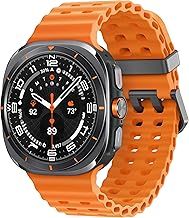
Is the Samsung Galaxy Watch Ultra worth the price compared to other models?

Can you cook frozen meat in the Instant Pot Duo 7-in-1?

How do you clean the Instant Pot Duo 7-in-1?


The Sony WF-1000XM6 delivers approximately 8 hours of battery life with active noise cancellation enabled. Independent testing by SoundGuys measured an impressive 9 hours and 41 minutes of actual playback—exceeding Sony's official specification.
| Mode | Battery Life | |------|--------------| | ANC On | ~8 hours (tested: 9h 41m) | | ANC Off | ~12 hours | | Total with case | ~24 hours |
The included charging case provides approximately 16 additional hours of battery (two full recharges), bringing total listening time to 24 hours before needing an outlet. The case supports both USB-C wired charging and Qi wireless charging for added convenience.
When you need power fast, the XM6 delivers:
3 minutes of charging = 45-60 minutes of playback
This quick charge feature works even with ANC enabled—perfect for grabbing a quick top-up before heading out.
Several factors may reduce the stated battery times:
Some users report approximately 6.5 hours when using LDAC at high bitrates with full ANC—still solid performance but below the baseline specification.
Battery life is unchanged from the previous generation—both models deliver 8 hours with ANC. Sony focused the XM6's improvements on sound quality and noise cancellation rather than endurance.
For most users, the WF-1000XM6's battery easily handles a full workday, long flights, or extended listening sessions without worry.
These are two separate Sony audio technologies that do very different things. Here's what each one actually does.
DSEE Extreme: Making Spotify sound better
When you stream music from Spotify, Apple Music, or any streaming service, the audio is compressed to reduce file size. This compression removes subtle details, especially in high frequencies.
DSEE Extreme is Sony's AI that tries to restore those details. It analyzes what you're listening to in real-time, predicts what the missing information should be, and adds it back.
Does it work? Yes. Multiple reviewers mention double-checking they hadn't accidentally switched to a lossless stream. The improvement is most obvious in cymbals, acoustic instruments, and vocal clarity. Things that should shimmer actually shimmer.
To enable it, open the Sony Sound Connect app, go to Sound settings, and toggle DSEE Extreme on. It's off by default.
360 Reality Audio: Surround sound for earbuds
This is Sony's spatial audio format. Compatible tracks sound like music is coming from all around you instead of just left and right. The WF-1000XM6 adds head tracking, so the sound field stays fixed in space as you turn your head.
The catch: There isn't much 360 Reality Audio content anymore. Deezer dropped support in 2022. Tidal removed it in 2024. Amazon Music still has some tracks, but the library is limited.
Recommendation:
DSEE Extreme is worth keeping on since it improves content you already listen to. 360 Reality Audio is a nice bonus when you find compatible tracks, but the limited library means it shouldn't be a primary purchase reason.
Compare prices on the Sony WF-1000XM6.
Short answer: Both work great, but Android users get better audio quality thanks to LDAC support. Here's what that actually means.
The codec difference matters
LDAC is Sony's high-resolution Bluetooth codec that can push audio at up to 990kbps. The AAC codec that iPhones use maxes out at 256kbps. That's almost 4x the data rate, and you can hear the difference with good recordings.
Android has had LDAC built in since Android 8, so any phone from the last few years supports it. To enable it on the WF-1000XM6, open the Sony Sound Connect app and set Bluetooth connection quality to "Priority on Sound Quality."
iPhones don't support LDAC. Apple has never added support for it or any other high-res Bluetooth codec. iPhone users are limited to AAC, which is decent but not audiophile-grade.
What iPhone users can do
Sony includes DSEE Extreme, an AI that restores detail to compressed audio from Spotify or Apple Music. It works well and noticeably improves clarity, especially in the high frequencies. Enable it in the Sound Connect app.
The app works the same on both
The Sound Connect app has identical features on iOS and Android:
Sometimes Android gets new features a week or two earlier, but they come to iOS shortly after.
The practical reality
If you're a casual listener streaming from Spotify, you probably won't notice much difference. The earbuds sound great either way.
But if you use Tidal, Amazon Music HD, or local FLAC files and care about audio quality, Android with LDAC is noticeably better. The soundstage is wider and detail retrieval is improved.
Check current prices to find the best deal.
Forgot to charge your earbuds? The WF-1000XM6's quick charge has you covered. Here's exactly what to expect.
The quick version:
Plug the case into a USB-PD fast charger (the same type that fast-charges your phone) for 3 minutes. You get about an hour of playback with noise cancellation on. Enough for most commutes or a workout.
Don't have a fast charger? A regular USB charger (5V/1.5A—most laptop ports and older phone chargers) gives you about 45 minutes from the same 3-minute charge.
Why this matters:
We've all realized our earbuds are dead right before leaving the house. With the XM6, plug in while you put on your shoes and grab your bag—you'll have enough charge for your trip.
Multiple reviewers tested this and confirmed Sony's numbers are accurate. SoundGuys measured about 45-50 minutes from a 3-minute standard USB charge.
Full charging times:
| What | How Long | |------|----------| | Empty earbuds to full | 1.5 hours (in charged case) | | Empty case via USB-C | 2 hours | | Empty case via wireless | 3 hours |
Total capacity is 8 hours per earbud charge, plus two more full charges from the case, giving you 24 hours before needing an outlet.
One thing to know:
Earbuds must be properly seated in the case to charge. A small LED lights up when they're connected. If that light isn't on, they're not charging even if the case is plugged in.
Bottom line:
The quick charge is genuinely useful and the numbers hold up in testing. If you frequently run out the door with dead earbuds, this feature will save you regularly.
Check prices on the Sony WF-1000XM6.
The WF-1000XM6 comes with four sizes of eartips (SS, S, M, L), but fit is a common concern. Here's what you're getting and what to expect.
What's in the box:
Sony uses their hybrid "Noise Isolation Eartips" from the XM4 era (2021). They're polyurethane foam with a softer outer coating—meant to combine foam-like isolation with better durability.
The fit issue:
Fit is the most common complaint about these earbuds. The tips aren't quite foam and aren't quite silicone. They're stiffer than expected, and some people find them uncomfortable after an hour or two.
Getting a good seal can be frustrating. The Sony app includes a fit test that plays tones and detects sound leakage. Many users fail it multiple times before finding the right size and insertion angle.
What reviewers say:
Multiple professional reviews mention fit as a weak point. The consensus: the earbuds sound incredible IF you get a proper seal, but achieving that seal requires more effort than competitors.
Apple's AirPods Pro 3 tips get praised for comfort. Bose uses shallower tips that don't insert as deep. Both are generally easier to fit than Sony's approach.
What you can do:
Aftermarket tips work great with the WF-1000XM6:
Many users who disliked the stock tips love the earbuds after switching.
Design improvement:
The earbuds are 11% smaller than the XM5, which helps some people. But the tip design is unchanged, so expect similar fit challenges as previous generations.
Budget an extra $15-20 for aftermarket tips if comfort is a priority. Compare prices on the WF-1000XM6.
This new feature lets you answer or reject calls just by moving your head. No touching required. Here's how it works and whether it's actually useful.
The basics:
When a call comes in, nod your head to answer. Shake your head to reject. The earbuds detect the motion and respond. Simple concept.
Setting it up:
Head gestures are off by default. To enable:
You need a proper seal in your ears for reliable gesture detection.
When it's useful:
Hands covered in flour while baking? Nod to answer. Driving and don't want to fumble? Nod to answer. Arms full of groceries? Same idea.
Users mention this feature works great for cooking, working on cars, home improvement projects, and any situation with messy or occupied hands.
The limitations:
This only works for calls. You can't use gestures to skip tracks, pause music, or trigger other functions. Music control still requires the touch panels.
The catch:
It can be unreliable during movement. Walking sometimes triggers false positives. Working out is worse. Active users might accidentally reject calls because the earbuds interpret running motion as a head shake.
You can adjust sensitivity in the app, but highly active users may want to disable it during exercise.
Bottom line:
If you take many calls with occupied hands, this is genuinely useful. If you rarely answer calls through your earbuds, you can ignore this feature.
Find the best price on the Sony WF-1000XM6.
Call quality on the Sony WF-1000XM6 is genuinely impressive and one of the bigger improvements over the previous generation.
Sony packed in eight microphones along with a bone conduction sensor and some clever AI processing. The bone conduction sensor is the interesting part – it detects when your jaw moves while talking and uses that to figure out which sounds are your voice versus background noise. This lets the system aggressively filter out everything that isn't you speaking.
In practice, this works really well. People on the other end of calls reported hearing clear voices with almost no background noise coming through. Wind handling is particularly good – even outdoors, calls stayed intelligible without that garbled wind-tunnel sound you get with lesser earbuds.
That said, they're not perfect. Some people noted that voices can sound a bit muffled or bassier than in person. It's not bad, just not 100% natural. The Technics EAH-AZ100 edges them out for the most lifelike voice reproduction, but for most people and most calls, the XM6 is more than good enough.
If you work from home and take a lot of video calls, or you're frequently on the phone in noisy places, these will serve you well. The noise suppression is genuinely effective without making you sound like a robot.
Yes, the Sony WF-1000XM6 can connect to two devices at the same time using Bluetooth multipoint.
This is super handy in practice. You can have them paired to your laptop and phone simultaneously, so when a call comes in on your phone, you don't have to fumble with disconnecting from one device and connecting to another. The earbuds handle the switch automatically.
To set it up, you'll need the Sony Sound Connect app. Go into System settings and flip on "Connect to 2 devices simultaneously." Then just pair your second device normally. Once both are connected, the earbuds will play audio from whichever device is actively streaming.
The transition between devices is pretty smooth. Start a video on your laptop, it plays through the earbuds. Pause that and hit play on your phone's music app, and the audio switches over. It's not always instantaneous – there might be a half-second delay – but it works reliably.
One thing to keep in mind: you're limited to two devices at a time. The earbuds can remember more paired devices, but if you try to connect a third while two are already active, one will get bumped. It disconnects whichever one wasn't playing audio most recently.
Also worth noting that when using multipoint, you might not get LDAC quality on both connections. The earbuds may default to AAC for better stability.
You can definitely use the Sony WF-1000XM6 at the gym, but there are some things to know before you start sweating with them.
The good news: they have IPX4 water resistance, which means they can handle sweat and light splashes without any problems. Typical gym sessions, weightlifting, stationary cardio, or yoga? No issues there.
Where it gets tricky is during high-intensity workouts. These earbuds don't have ear wings or hooks like dedicated sports buds, so they might not stay put as well during running, jumping, or really bouncy activities. The fit relies on the ear tip seal and the shape of your ear, which works great for most activities but isn't ideal when you're doing burpees or sprinting.
The 6.5g weight per earbud keeps them comfortable, and the matte finish has better grip than glossy earbuds. Sony also included some workout-friendly features like scene detection that can automatically adjust your settings when it realizes you're exercising.
One important thing: don't take the case to the gym. The earbuds are splash-resistant, but the case isn't.
Bottom line: great for the gym, fine for a light jog, but if running or intense cardio is your main thing, you might want dedicated sports earbuds with ear hooks for that extra security.
The noise cancellation on the Sony WF-1000XM6 is genuinely impressive and ranks among the best you'll find in true wireless earbuds.
Sony packed these earbuds with eight microphones (four in each bud) and a new processor that's three times faster than what was in the XM5. The result? About 25% better noise cancellation compared to the previous generation, with an 88% average reduction in outside noise according to independent testing.
Low-frequency noise like airplane engines, air conditioner hum, and the rumble of public transit gets almost completely eliminated. These are fantastic for flights or working in noisy environments.
The one area where they're not quite as strong is blocking out mid-range frequencies like people talking. Office chatter and conversations can still leak through somewhat, though they're definitely muffled. This is pretty normal for ANC earbuds – completely silencing human voices is tough.
The Adaptive NC Optimizer is a nice touch. It automatically adjusts the noise cancellation based on where you are and what you're doing. You can also tweak everything manually in Sony's app if you want more control.
For context, the AirPods Pro 3 edges them out slightly with 90% noise reduction, but we're talking marginal differences at this level.
Download ShopSavvy AppCompare prices for anything in real-time, set price alerts, watch for deals by keyword, and much more
Install ShopSavvy Browser ExtensionCompare and track prices automatically while you shop online at thousands of websites.
Loading trending deals...
In most cases, yes. Our answers are researched using ShopSavvy's product database, real-time pricing from thousands of retailers, and analysis of user reviews. That said, product details can change — we recommend checking the latest prices and availability before making a purchase.
We pull data from thousands of retailers and combine it with user reviews and expert analysis. Our product database covers millions of items, and prices are typically updated multiple times a day.
We try to keep our content as fresh as possible. Most answers are reviewed and updated regularly, though the frequency can vary depending on how quickly a product category changes.
Get the latest news, and updates on ShopSavvy. You'll be glad you did!