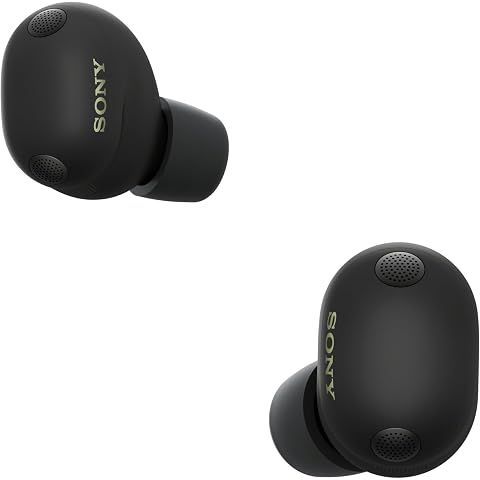
The Sony WF-1000XM6 and Bose QuietComfort Ultra Earbuds 2 are the heavy hitters in the premium earbuds space, and they're pretty evenly matched—just with different strengths.
Comfort is where Bose has an edge. The QC Ultra Earbuds 2 have these little stability bands that help keep them secure, and a lot of people find them lighter and less intrusive than the Sonys. If you have smaller ears or plan to wear them all day, Bose might be the more comfortable choice. The XM6 improved its fit from the XM5, but some users still find them a bit bulky.
Noise cancellation is basically a tie. Both hit around 88-90% noise reduction in testing. Sony uses their QN3e processor that adapts in real time, Bose has CustomTune that calibrates to your specific ears. Either way, you're getting excellent ANC.
Sound quality goes to Sony—especially for Android users. The XM6 supports LDAC for high-res audio, has a more neutral and detailed sound signature, and lets you tweak with a 10-band EQ. Bose sounds more bass-heavy and exciting, which some people love but audiophiles often find fatiguing.
Battery life: Sony wins. 8 hours versus about 6 for Bose. Not a huge deal if you charge regularly, but it adds up.
Here's my take:
- iPhone user who values comfort? Get the Bose.
- Android user who cares about audio quality? Get the Sony.
- Exercise a lot? Bose's stability bands help.
- Take lots of calls? Sony's microphone system is better.
Both are excellent. You'd be happy with either one, honestly.
We may earn a commission when you buy through these links, at no extra cost to you. How ShopSavvy makes money
How we researched this
Where this comes from: this answer draws on the product's published specifications and the reviews ShopSavvy collected for it, alongside prices from 1 retailer in ShopSavvy's price data, most recently seen Mar 18, 2026.
📚More About Sony WF-1000XM6 Earbuds
Considering the Sony WF-1000XM6 Earbuds?
Here's our "TLDR" Review
 Download ShopSavvy App
Compare prices across tens of thousands of stores, set price alerts, watch for deals by keyword, and much more.
 Install ShopSavvy Browser Extension
Compare and track prices automatically while you shop online at thousands of websites.
More Answers
If you're still curious about the Sony WF-1000XM6 Earbuds, here are some other answers you might find interesting:
- What is Quick Attention mode on the Sony WF-1000XM6?
Quick Attention is one of those Sony WF-1000XM6 features you don't think you need until you use it—then you wonder how you lived without it. Place your finger...
- How do I know which ear tip size is right for my Sony WF-1000XM6?
Getting the right ear tip size for your Sony WF-1000XM6 seems simple, but it makes a huge difference. Wrong size = weak bass, bad ANC, and earbuds that feel...
- Can I use the Sony WF-1000XM6 with Samsung TV?
Good news: yes, you can pair your Sony WF-1000XM6 with your Samsung TV. Not-so-good news: it's not the seamless experience you might hope for. Pretty...
- Why does my Sony WF-1000XM6 show a poor seal in the app?
That "poor seal" warning in the app? One of the most common complaints about the Sony WF-1000XM6. And one of the most fixable. Here's the thing: the seal...
- What's the difference between LC3 and LDAC codecs on the Sony WF-1000XM6?
Two codecs, two completely different jobs on your Sony WF-1000XM6. Here's when to use which. LDAC is Sony's baby—a high-resolution codec that can push up to...
- Does the Sony WF-1000XM6 have LE Audio support?
Short answer: yes, the Sony WF-1000XM6 supports LE Audio. And it's actually kind of a big deal if you care about gaming or video. Traditional Bluetooth has...
- Can I replace just one Sony WF-1000XM6 earbud if I lose it?
Lost one WF-1000XM6 earbud? Dropped one down a drain? Dog got to it? I feel your pain. The good news: you don't have to buy a whole new set. Call Sony Support...
- Why does the Sony WF-1000XM6 use Bluetooth 5.3 instead of Bluetooth 6?
I've seen this complaint pop up a lot: "Why doesn't the $330 WF-1000XM6 have the latest Bluetooth 6?" Fair question. Let me explain why it's not actually a big...
- What is the difference between 360 Reality Audio and 360 Upmix on the Sony WF-1000XM6?
Sony gives you two ways to get spatial audio on the WF-1000XM6, and they work completely differently. Let me clear up the confusion. This is actual 3D audio,...
- How does the Adaptive NC Optimizer work on the Sony WF-1000XM6?
Ever wonder why your noise cancellation sometimes feels incredible and other times just... okay? That's exactly the problem the Adaptive NC Optimizer is...