Trending Answers

How do you clean the Instant Pot Duo 7-in-1?

What is the battery life of the Fitbit Charge 6?

Can you cook frozen meat in the Instant Pot Duo 7-in-1?

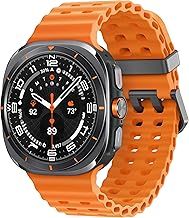
How accurate is the Samsung Galaxy Watch Ultra for fitness tracking?


AppleCare+ for AirPods Pro 3 costs either $29 upfront for two years or $3.99 per month. Given the price of the earbuds ($249), it's relatively inexpensive insurance.
Here's what you actually get:
First, your warranty extends to two full years from when you bought AppleCare+. Any defects, hardware failures, or battery degradation (below 80% capacity) are covered at no additional cost. Without AppleCare+, you only get one year.
Second—and this is the main reason people buy it—unlimited accidental damage coverage. Drop them, step on them, wash them in your jeans pocket, sweat on them until something breaks: all covered. Each incident costs $29 to repair or replace. Given that out-of-warranty replacement for a single AirPod costs significantly more, one claim essentially pays for the plan.
You also get priority support, which means faster response times when you contact Apple with issues, plus express replacement service where they ship you new AirPods before you send back the damaged ones (with a credit card hold).
What's not covered: intentional damage, cosmetic issues that don't affect function, and loss or theft. If you lose your AirPods, Find My can help locate them, but AppleCare+ won't replace them for free.
You have 60 days from purchase to add AppleCare+. You can do it through the Apple Store app, online, at an Apple Store, or by calling Apple Support.
Is it worth it? For $29 over two years, I'd say yes for most people. These are expensive, tiny earbuds that go everywhere with you. One accident—even a minor one that damages a single earbud—makes the coverage pay for itself.
The controls on AirPods Pro 3 are squeeze-based, not tap-based. There's a pressure-sensitive area on each stem that you pinch to trigger actions.
Here's the basic rundown: one squeeze plays or pauses (or answers a call), two squeezes skip forward, three squeezes go back. Press and hold to cycle through listening modes—ANC, Transparency, Adaptive Audio, and Off.
For volume, swipe up or down on the stem. This one takes some getting used to. The touch-sensitive area is small, and you need to swipe with a light touch rather than pressing. Some people find it natural after a few days; others always find it slightly awkward.
During calls, the controls adapt. Press and hold mutes or unmutes you. Double squeeze ends the call—useful when you want to hang up without reaching for your phone.
What's nice is the customization. In your iPhone settings, you can configure what each earbud does independently. A lot of people set one earbud to control Siri (press and hold) while the other cycles noise modes. You can also choose which listening modes are included in the cycle if you never use certain ones.
One common complaint: people accidentally trigger controls when inserting or adjusting their AirPods. The stems are right where you naturally grab them. A few things help: use the earbud body rather than the stem when inserting, find an ear tip size that keeps them stable so you're not constantly adjusting, and consider setting double-squeeze to something non-disruptive in case you accidentally trigger it.
For pairing with non-Apple devices, the gesture is different: double-tap the front of the charging case (not the AirPod stems) until the light flashes white.
The answer depends on which features matter to you.
For the core AirPods Pro 3 experience—noise cancellation, transparency mode, Adaptive Audio, Spatial Audio, heart rate monitoring, hearing aid features, and Find My—any iPhone running iOS 18 works. That includes iPhone XS and everything newer.
The one major exception is Live Translation. This feature requires an iPhone 15 Pro or later, because it uses Apple Intelligence for on-device processing. The A17 Pro chip (and newer) has the neural engine power to run translation models locally while keeping your conversations private. Older iPhones simply don't have the processing capacity.
Here's what that means practically:
If you have an iPhone 15 Pro, 16, or later, you get every feature. All the headline capabilities work, including real-time translation in English, French, German, Portuguese, and Spanish (with more languages coming).
If you have an iPhone 14, 13, 12, 11, or XS, you still get an excellent experience. Noise cancellation, heart rate monitoring, hearing aid features, Spatial Audio—all of it works. You just won't have Live Translation.
If you're on iPhone XS or XR specifically, you're at the minimum iOS 18 compatibility line. Everything works, but you might want to consider whether your phone's battery and overall performance are still holding up for daily use.
The iPad situation is similar: basic features work with iPadOS 18, but Live Translation needs an M-series iPad Pro or iPad Air running iPadOS 26.
For Mac users, AirPods Pro 3 pair and work for audio, ANC, and Spatial Audio with macOS Sonoma or later. Some configuration still requires an iPhone initially.
Yes, they work—just like any Bluetooth headphones. You'll hear audio, you can make calls, and the noise cancellation functions. But the experience is noticeably stripped down compared to using them with Apple devices.
To pair AirPods Pro 3, open the case with the earbuds inside and double-tap the front until you see the white flashing light. Then add them through Windows Bluetooth settings like any other device.
Once connected, basic functionality is solid. Music plays, videos work, Teams and Zoom calls use the microphones just fine. You can control ANC and Transparency mode using the stem press-and-hold gesture, adjust volume with stem swipes, and play/pause with single squeezes.
What you don't get is everything that makes AirPods feel integrated. No automatic ear detection—take an earbud out and your music keeps playing. No Siri. No Spatial Audio (Windows doesn't support it). No automatic switching between devices. No native battery level display in Windows, though third-party apps can sometimes fill that gap.
All the new Pro 3 features—heart rate monitoring, Live Translation, hearing aid mode—require an iPhone. They simply don't function on Windows. Even basic things like customizing what the stem controls do requires access to iOS settings.
The biggest practical issue: firmware updates. You'll need to connect to an iPhone or iPad periodically to install updates. If you don't own any Apple devices, your AirPods will eventually fall behind on updates.
Bottom line: if you're primarily a Windows user without other Apple devices, you're paying a premium for features you can't access. Sony, Bose, or Jabra earbuds integrate better with Windows and still deliver excellent audio and ANC.
This is where things get interesting—and divisive. The AirPods Pro 3 don't just sound 'better,' they sound different, and whether that's an improvement depends on your ears and music preferences.
Apple redesigned the acoustic architecture with a new driver and multiport airflow system, claiming deeper bass, clearer vocals, and a wider soundstage. For many listeners, that's exactly what they hear. Bass hits harder, the soundstage feels more spacious, and there's more immediate impact to music. If you listen to pop, hip-hop, electronic, or use your AirPods primarily for workouts and podcasts, you'll probably enjoy the Pro 3 sound.
But there's a vocal contingent of audio enthusiasts who strongly disagree. The complaints center on what's called a V-shaped sound signature—boosted bass, boosted treble, with the midrange taking a back seat. Some find the treble harsh or peaky, causing listening fatigue over longer sessions. Words with 'S' sounds can be uncomfortably sibilant to certain ears. The overall effect has been described as more artificial or processed compared to the AirPods Pro 2's more balanced, neutral tuning.
Here's the thing: the Pro 2 were tuned for balance and refinement. The Pro 3 are tuned for immediate impact and excitement. Neither approach is wrong—they're just different philosophies. For acoustic music, classical, jazz, and recordings where subtle detail matters, the Pro 2 might actually be the better choice. For bass-heavy music and casual everyday listening, the Pro 3 will likely sound more engaging.
If you're considering an upgrade and sound quality is your primary concern, demoing both is worthwhile if you can. Your ears are the ultimate judge.
The AirPods Pro 3 case charges four different ways, which means you've probably already got a compatible charger lying around.
USB-C is the fastest and most straightforward. Plug in a cable, get a charge. If you're in a hurry, this is the way to go.
MagSafe is the convenient wireless option. The case snaps magnetically onto MagSafe chargers, so you don't have to worry about positioning it precisely. Just place it on the charger and the magnets align everything correctly.
Any standard Qi wireless charger also works, though you lose the magnetic alignment. It charges fine, just requires a bit more care to position the case correctly on the pad.
Here's the handy one: Apple Watch chargers work too. If you travel with a Watch and want to minimize cables, you can charge both your Watch and AirPods case with the same charger. Just not at the same time, obviously.
For quick top-ups, 5 minutes of charging gives you about an hour of listening time. A full charge from empty takes roughly an hour for the earbuds and a couple hours for the case depending on which charging method you're using.
There's also an 80% charge limit option in settings—similar to what iPhones have. If you always keep your AirPods on a charger when not in use, enabling this can help preserve battery health by not keeping the cells at maximum charge constantly.
One thing to know: the USB-C port is charging only. You can't use it for wired audio output. And while the case is IP57 water resistant, don't charge it when wet—let the USB-C port dry out first.
Adaptive Audio is basically automatic mode switching—the AirPods Pro 3 decide whether you need noise cancellation or transparency and adjust on the fly without you doing anything.
Here's how it plays out in practice. You're walking down a quiet street with music playing, and the system leans toward more noise cancellation. Approach a busy intersection, and it automatically lets in more ambient sound so you can hear traffic. Step into a noisy coffee shop, and it ramps up isolation again. The transitions are usually smooth enough that you don't really notice them happening.
The feature includes Conversation Awareness, which is genuinely useful. When you start talking to someone, the system detects your voice and automatically lowers the music while reducing background noise. You can have a quick conversation without pausing anything or removing your earbuds. When you stop talking, everything goes back to normal. For quick exchanges at checkout counters or brief conversations with coworkers, it's convenient.
You can access Adaptive Audio through Control Center—long-press the volume slider and select Adaptive. There's also a slider in settings that lets you adjust how transparent you want the mode to be. More transparency means you'll hear more of your surroundings even in 'quiet' environments; less transparency means stronger noise cancellation overall.
Whether you'll like Adaptive Audio depends on how you feel about letting the AirPods make decisions for you. Some people appreciate not having to think about which mode they're in. Others find the automatic adjustments unpredictable or prefer the consistency of manual mode selection.
My suggestion: try it for a few days of normal use. If the automatic adjustments feel natural and helpful, keep using it. If you find yourself frustrated by when it switches, you'll probably be happier with manual ANC or Transparency.
The AirPods Pro 3 have Apple's best Find My technology yet, and it makes a genuine difference when you can't locate them.
The standout feature is Precision Finding. The charging case has an upgraded Ultra Wideband chip that extends tracking range by about 50% compared to the Pro 2. When you're reasonably close, your iPhone shows you exactly which direction to walk—with arrows, distance readings, and haptic feedback that gets stronger as you approach. It's similar to finding an AirTag, just built into the case.
For basic finding, the sound feature is what you'll use most often. Open Find My, select your AirPods, and tap to play a sound. The case has its own speaker now, so it plays audio even with the lid closed and earbuds inside. The sound starts quiet and gets progressively louder, which is helpful when you're not sure if you're in the right room.
What about when you left them somewhere across town or truly don't know where they are? The Find My network kicks in. Any Apple device that passes near your AirPods anonymously reports their location back to you. You'll see a pin on the map showing where they were last detected. This can take time if they're in a location without many Apple devices passing by, but it works.
Lost Mode is worth enabling immediately if you think they're gone for good. It locks the AirPods to your Apple ID (so they're useless to anyone else) and displays your contact info if someone finds them.
The most important thing to do right now: verify Find My is actually enabled. Go to Settings > [Your Name] > Find My and make sure your AirPods show up there. You want to discover any setup issues before you need to use it.
Unfortunately, no—and this has annoyed a lot of people.
Apple changed the ear tip design for the AirPods Pro 3, using a new attachment mechanism and foam-infused silicone material instead of the pure silicone on the Pro 2. The tips physically don't fit, and there's no adapter or workaround.
If you'd found the perfect third-party ear tips for your Pro 2—memory foam ones, different sizes, or tips from a brand you trusted—you're starting over. Your collection of replacement tips won't work with the new model.
Apple's reasoning is that the new foam-infused silicone provides better comfort and seal, and they added a fifth size (XXS) for people with smaller ear canals. These are legitimate improvements, but it doesn't make the incompatibility less frustrating for people who had their fit dialed in.
When you need replacement tips for your Pro 3, you have two options. Apple sells official replacements on their website and in Apple Stores. Third-party manufacturers like Comply, SpinFit, and others now make Pro 3-specific tips—but be careful when shopping.
Here's the important thing: generic listings for 'AirPods Pro tips' usually mean Pro 1 or Pro 2. The Pro 3 are new enough that you need to explicitly look for tips that say 'AirPods Pro 3' or 'Pro 3 compatible.' If a listing doesn't specify the generation, assume it won't fit. When in doubt, message the seller to confirm before buying.
The good news is that the five included sizes (XXS through L) give you a decent range to work with out of the box. Apple's ear tip fit test can help you find the right size—run it before assuming you need aftermarket tips.
Think of Spatial Audio as surround sound for your ears—except instead of needing speakers positioned around a room, the AirPods Pro 3 create the illusion that sound is coming from specific locations in 3D space around your head.
The way it works is actually clever. Inside each AirPod are tiny sensors that track exactly how your head is positioned. Turn your head right while watching a movie, and the dialog from the character onscreen will shift to stay 'centered' on the screen rather than rotating with your head. It creates the sensation that the sound exists in a fixed location rather than just inside your earbuds.
You can access three modes in Control Center: Off (normal stereo), Fixed (spatial effect without head tracking), and Head Tracked (full Spatial Audio that responds to movement). The head-tracked version is the immersive one, but it does use a bit more battery.
Where Spatial Audio really shines is with Dolby Atmos content—music on Apple Music with the Dolby badge, movies and shows with Atmos audio tracks. These are specifically mixed to take advantage of 3D positioning, so instruments and effects are deliberately placed around you. Standard stereo content gets a simulated effect that can add some spaciousness, but the results are more hit-or-miss.
There's also Personalized Spatial Audio, where you use your iPhone's Face ID camera to scan your ears and head shape. The system then tailors the spatial effect to your specific anatomy. It's worth trying—some people find it meaningfully improves the realism, while others don't notice much difference.
One thing to understand: Spatial Audio is about positioning, not quality. It doesn't make music sound 'better' in terms of fidelity; it makes music sound like it's coming from around you rather than from two points in your ears. It's a different dimension of the listening experience.
Download ShopSavvy AppCompare prices for anything in real-time, set price alerts, watch for deals by keyword, and much more
Install ShopSavvy Browser ExtensionCompare and track prices automatically while you shop online at thousands of websites.
Loading trending deals...
In most cases, yes. Our answers are researched using ShopSavvy's product database, real-time pricing from thousands of retailers, and analysis of user reviews. That said, product details can change — we recommend checking the latest prices and availability before making a purchase.
We pull data from thousands of retailers and combine it with user reviews and expert analysis. Our product database covers millions of items, and prices are typically updated multiple times a day.
We try to keep our content as fresh as possible. Most answers are reviewed and updated regularly, though the frequency can vary depending on how quickly a product category changes.
Get the latest news, and updates on ShopSavvy. You'll be glad you did!