No, you cannot upgrade either the RAM or internal storage after purchasing the MacBook Air M4. Both components are permanently integrated into the system as part of Apple's design.
Why Upgrades Are Not Possible
The RAM in Apple Silicon Macs is unified memory that sits within the M4 chip package. There are no memory slots or removable modules. Similarly, the internal SSD uses flash memory chips soldered directly to the logic board.
This integrated design enables the MacBook Air's thin form factor, high memory bandwidth (120GB/s), and excellent power efficiency. The trade-off is the lack of post-purchase upgrade flexibility.
Configuration Options
At purchase, you can select from:
RAM: 16GB (standard), 24GB, or 32GB Storage: 256GB, 512GB, 1TB, or 2TB
Choose carefully, as these decisions are permanent for the life of your Mac.
Expanding Storage After Purchase
While internal storage cannot be upgraded, external options provide effective solutions:
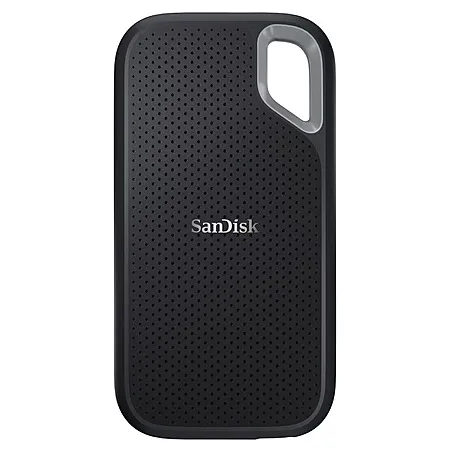
External SSDs: The two Thunderbolt 4 ports support external storage at speeds up to 40Gbps. Quality portable SSDs like the Samsung T9 or SanDisk Extreme Pro deliver fast, reliable expansion that feels nearly as responsive as internal storage.
Cloud Storage: Services like iCloud Drive, Google Drive, or Dropbox supplement local storage effectively, especially for documents you access across multiple devices.
Thunderbolt Docks: For desktop workflows, a dock with built-in storage offers seamless, always-connected expansion.
The Bottom Line
Configure your MacBook Air M4 with adequate RAM and storage from the start. When in doubt, go up one tier from what you think you need, particularly for RAM, as software requirements tend to increase over time.
We may earn a commission when you buy through these links, at no extra cost to you. How ShopSavvy makes money
How we researched this
Where this comes from: this answer draws on the product's published specifications and the reviews ShopSavvy collected for it, alongside prices from ShopSavvy's price data.
 Download ShopSavvy App
Compare prices across tens of thousands of stores, set price alerts, watch for deals by keyword, and much more.
 Install ShopSavvy Browser Extension
Compare and track prices automatically while you shop online at thousands of websites.
More Answers
If you're still curious about the , here are some other answers you might find interesting:
- 🎨 Can the MacBook Air M4 run professional apps like Photoshop and Illustrator?
Yes, the MacBook Air M4 runs Adobe Creative Cloud applications and other professional software very well. These applications have been optimized for Apple...
- 💾 What storage size should I choose for the MacBook Air M4?
The MacBook Air M4 offers storage options from 256GB to 2TB. Since internal storage cannot be upgraded after purchase, choosing appropriately from the start is...
- ⚖️ How does the MacBook Air M4 compare to the MacBook Pro M4?
The MacBook Air M4 and MacBook Pro M4 share the same base M4 chip, but several key differences justify the Pro's higher price for specific use cases. | Feature...
- 📶 Does the MacBook Air M4 support Wi-Fi 7?
No, the MacBook Air M4 does not support Wi-Fi 7. It uses Wi-Fi 6E, which remains excellent for nearly all use cases. Wi-Fi: 6E (802.11ax) with 2.4GHz, 5GHz,...
- ⚡ What's the difference between the 8-core and 10-core GPU options on the MacBook Air M4?
The MacBook Air M4 offers two GPU configurations: 8-core on the base $999 model and 10-core on higher configurations or as a $100 upgrade. The two additional...
- 📐 Should I buy the 13-inch or 15-inch MacBook Air M4?
The choice between the 13-inch and 15-inch MacBook Air M4 comes down to prioritizing portability versus screen real estate. Both share the same M4 chip and...
- 💻 Is the MacBook Air M4 good for programming and software development?
The MacBook Air M4 is excellent for programming and software development. Most professional developers find it handles their workflows comfortably. Web...
- 🔌 What ports does the MacBook Air M4 have?
The MacBook Air M4 features a minimal but capable port selection: two Thunderbolt 4 ports, one MagSafe 3 charging port, and a 3.5mm headphone jack. Left side:...
- 🔄 Is it worth upgrading from the M3 MacBook Air to the M4?
For most M3 MacBook Air owners, upgrading to the M4 is not worth the cost. The improvements are real but incremental rather than transformative. Performance:...
- 🤖 What is Apple Intelligence and how does it work on the MacBook Air M4?
Apple Intelligence is Apple's integrated AI system built into macOS, providing on-device AI features throughout the operating system on the MacBook Air M4. The...